Spenden
- Activities
- About NetAP
- Your help
- Education
- Media


The only sustainable solution to the suffering of cats is consistent neutering. NetAP neuters cats from almost all cantons in Switzerland on an ongoing basis and is campaigning for a national neutering obligation for outdoor cats.
Here we give you an insight into some of the neutering campaigns we carried out in Switzerland in 2025. This list is not exhaustive, as we often refrain from reporting due to time constraints. This list is not exhaustive, as we often refrain from reporting due to time constraints.
The farmer from Alosen in the canton of Zug explained to us that she no longer had any cats of her own. However, there were always several cats on her farm and she was concerned that they might reproduce. Another farmer from the region recommended that she contact us, which she did. Unfortunately, we were unable to take the cats in due to a lack of space, but we caught them all to have them neutered. Of the eleven cats, two had already been neutered and one has not reappeared to this day. The others were neutered, treated for internal and external parasites, vaccinated and marked. Even the ones that had already been neutered were vaccinated, dewormed and marked. We agreed that all the cats could be returned so that the territory would be occupied, otherwise there was a high risk that new cats would simply turn up. We also agreed to provide food if possible. If the eleventh cat turns up, it will also go through the neutering programme.
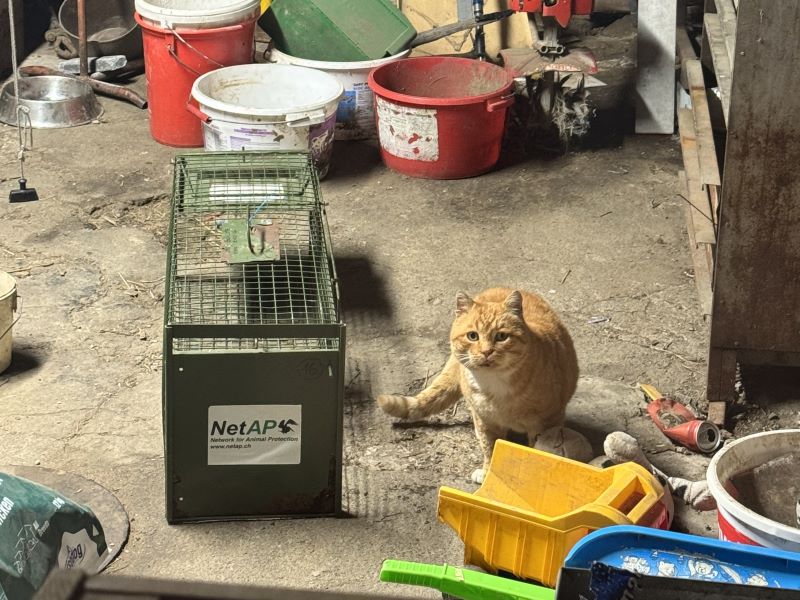
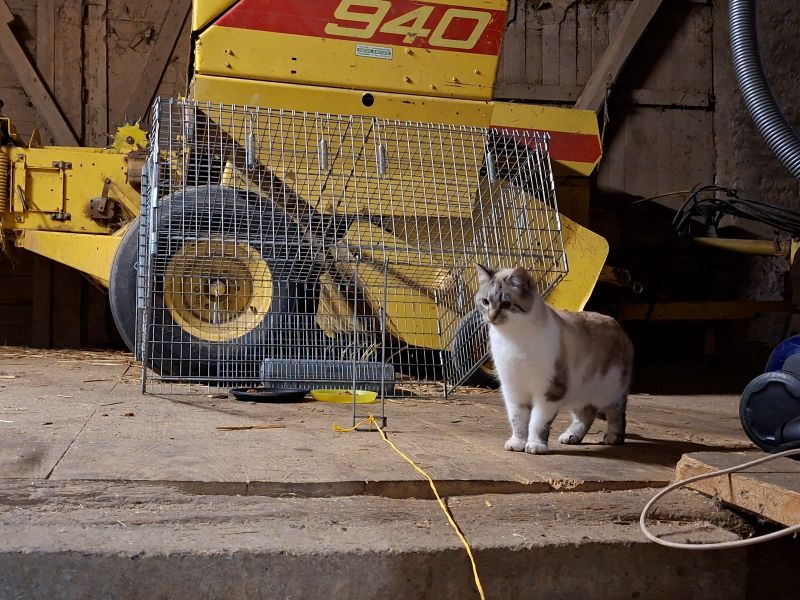
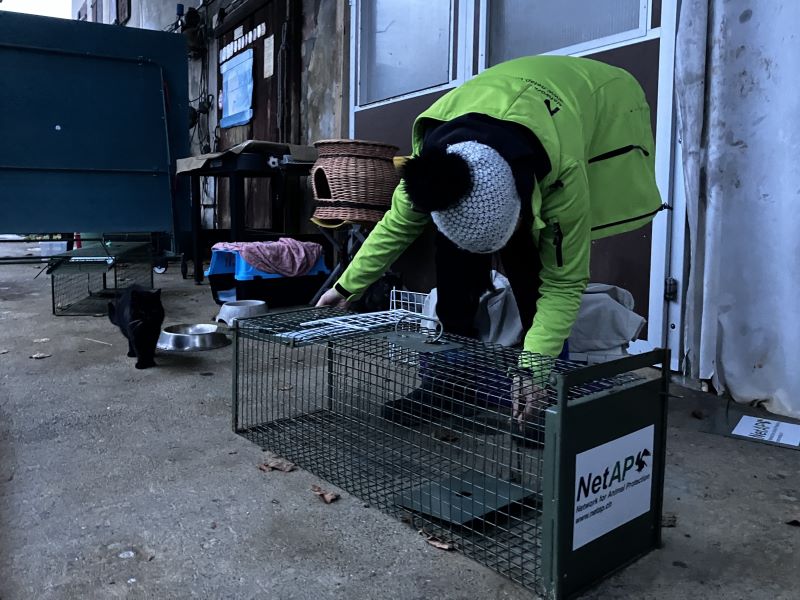
A local resident tipped us off about two farms where several unneutered cats were living. One farm agreed immediately to have all the cats neutered, while the other took a little more persuasion. The farmer had forgotten to talk to his wife, and at first the operation looked set to fail. But then they agreed after all. All the cats on the two farms were caught, but stray cats still roamed the area from time to time. This prompted us to talk to the farmer above the farm. They were also very grateful for our help, and it turned out that these were the same cats we had already seen on the other farms, but which had not gone into the traps because they were already well fed at home. Now three more farms are enjoying a healthy, neutered cat population.
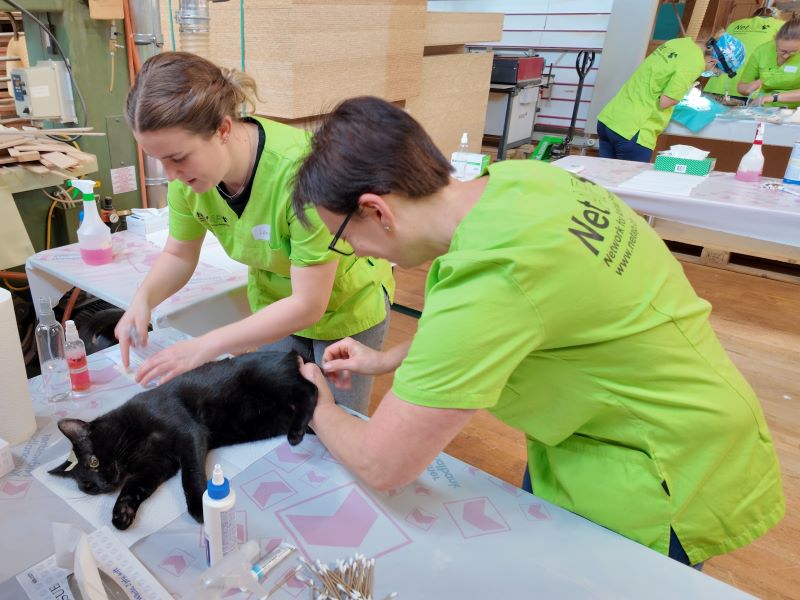
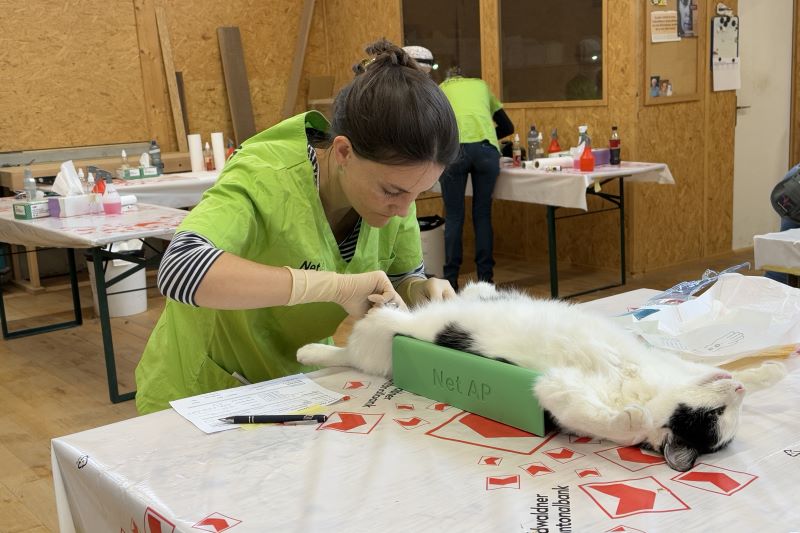
On 15 November 2025, a large-scale neutering day took place for the first time in Stein in the canton of Appenzell Ausserrhoden. In collaboration with the Appenzell Animal Welfare Association, 71 cats (42 female and 29 male) were examined, treated for internal and external parasites, vaccinated, marked and neutered. A few rotten teeth were removed, the ears of a snow-white cat had to be removed due to advanced squamous cell carcinoma, wounds were treated and a few other additional procedures were performed. More cats could have been treated, but for the first joint operation day, the result was remarkable.
All cats were previously caught by volunteers from the Appenzell Animal Welfare Association or brought in by farmers. A lot of persuasion was required beforehand. Those cats that could not be returned to their territory (around a third) were additionally tested, microchipped and given a vaccination against leukaemia in addition to the distemper/cat flu vaccination.
In Stein, we were provided with a school building for the day, which was an excellent place to work. It was warm, bright, friendly and we had plenty of space. It was simply wonderful that the school community was so supportive of animal welfare. In addition to the cats that were no longer allowed to return to their territory, a few other cats remained under observation. They had undergone major surgery and still needed painkillers for a while.
It was a really nice start to what we hope will be a long-lasting collaboration. Swiss Animal Protection (STS) contributed to the costs of this neutering day.
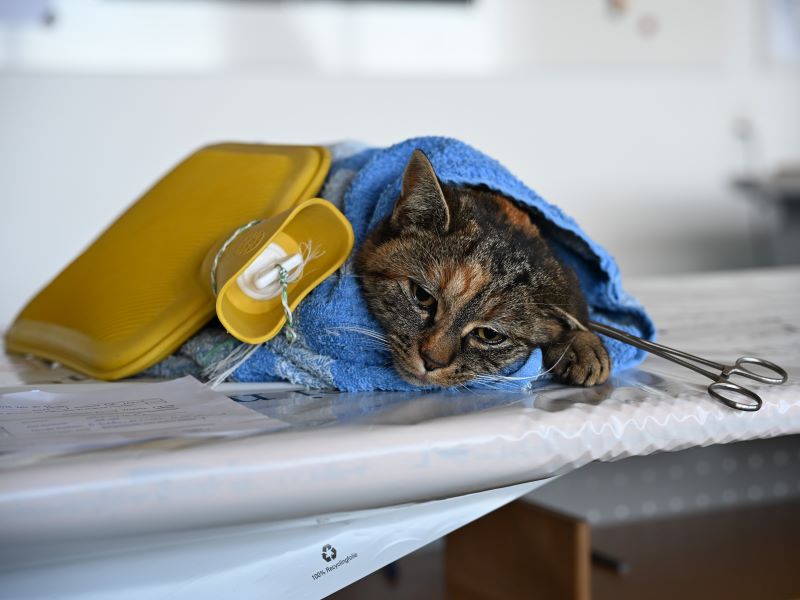
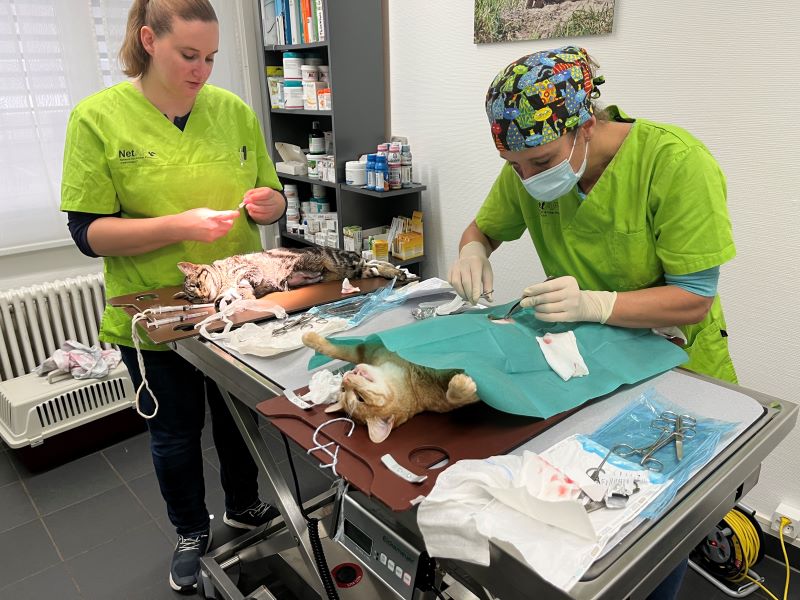
On Sunday, 9 November 2025, another neutering day took place at the Leimental Veterinary Clinic in Biel-Benken. Feral cats from the canton of Basel-Landschaft were caught by our volunteers beforehand and examined, treated, vaccinated, marked and neutered by our team at the clinic. Unfortunately, two farmers decided at short notice that they did not want to have their cats neutered after all. As there is no legal obligation, we cannot force them to do so. On both farms, it would have been more than necessary to put an end to uncontrolled breeding in an animal-friendly manner.
We treated 31 cats that day: 20 females and 11 males. We kept three of them for a few days because we wanted to observe them a little longer. The others were able to return to their territories safe and sound the next day.
We would like to thank the Leimental Veterinary Clinic for allowing us to hold such events on a regular basis. When we work in a clinic, we can carry out additional tests on site (X-rays, blood analyses) and even admit patients if necessary.
During a walk, our cat catcher noticed some sick kittens. She talked to the farmers and convinced them to have all the cats neutered. It was high time, because most of the cats on this farm were sick. Our helper took the first cats, three kittens, to a veterinary clinic, where one of the animals died after a few days. For too long, people had just stood by and watched without doing anything to alleviate their suffering.
After our volunteer reported the case to the NetAP office, it turned out that the farmer was an old acquaintance who had already had cats neutered at NetAP’s expense the previous year. At the time, he had insisted that he had no other cats, but he had obviously not kept to the agreement.
In addition to the eight cats that had already been neutered, there were another 15 animals. All of the cats had severe diarrhoea, some had colds and dental problems. We kept the cats for several weeks until they were healthy and worked with animal shelters to find new owners for them. It was clear that the local community was unable to care for the animals.
Although a report was apparently made to the relevant veterinary office last year, we will have to keep an eye on the farm ourselves in future, as we are concerned about the health of the remaining eight cats.
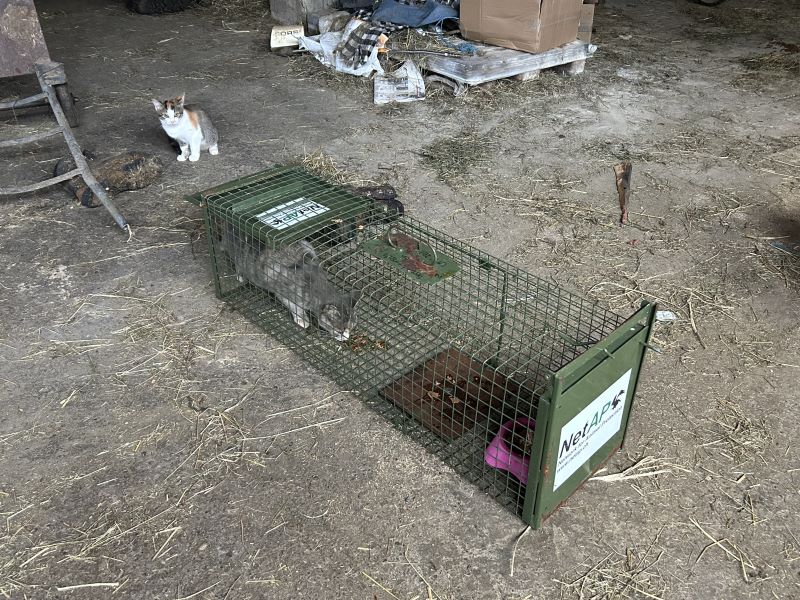
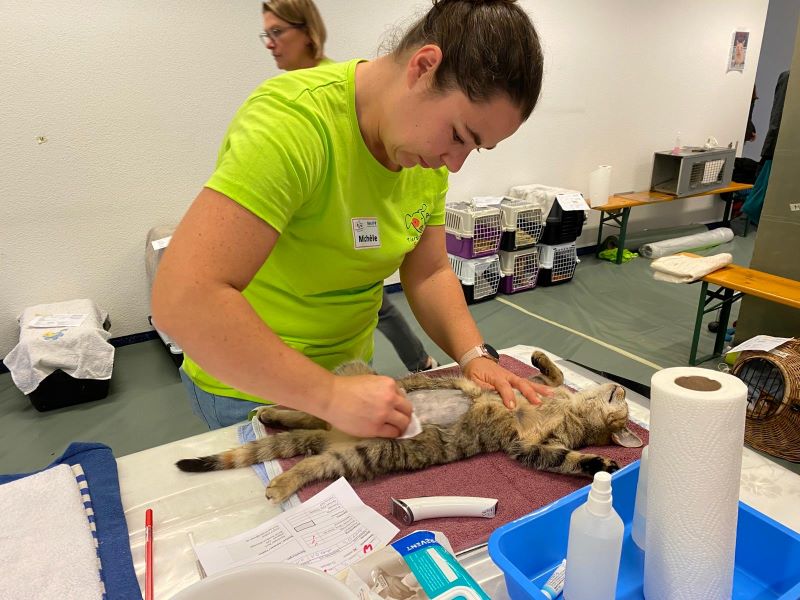
On 2 November 2025, the big Thurgau neutering day took place again in Müllheim. As always, this day was organised in close cooperation with Tierschutz Steckborn (Steckborn Animal Welfare) and financially supported by STS. On this day, 108 cats (67 female and 41 male) were examined, treated for internal and external parasites, vaccinated and neutered. Most of the cats were in very good general condition, so that hardly any special procedures or treatments were necessary.
A truly wonderful case took us to Forch in the canton of Zurich. The farm’s four cats had all been neutered when a feral female cat settled on the farm. Somehow, they missed the opportunity to catch her, partly because they didn’t really know how to go about it. And so the original four cats soon became eleven. We were asked for help and we got started. On Monday evening, in freezing cold winds and drizzling rain, we managed to catch all the unneutered cats, not least because the locals had consistently fed them in the trap beforehand, so the cats were no longer afraid of it.
On Tuesday, the seven cats were examined at our two partner practices in Wetzikon and Uster, treated for internal and external parasites, vaccinated, microchipped and neutered. One little tomcat had an umbilical hernia, which was repaired straight away, and the big ginger cat had some minor dental work done.
After spending another night under supervision and enjoying a hearty meal, the seven were allowed to return to the station on Wednesday. Everyone on site was delighted to see the group again. The warm thanks and words of praise were good for our souls, and the local people’s contribution to the costs was as natural as it was generous. If only every mission could be like this.
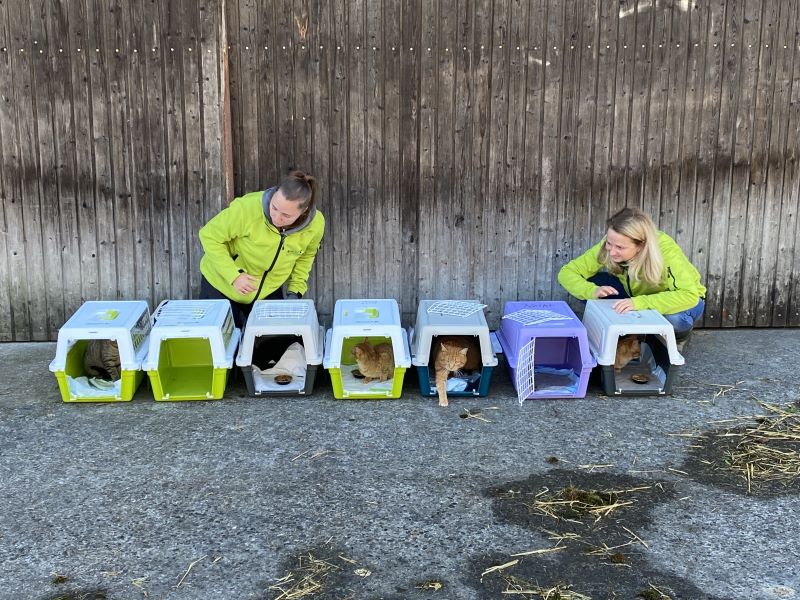
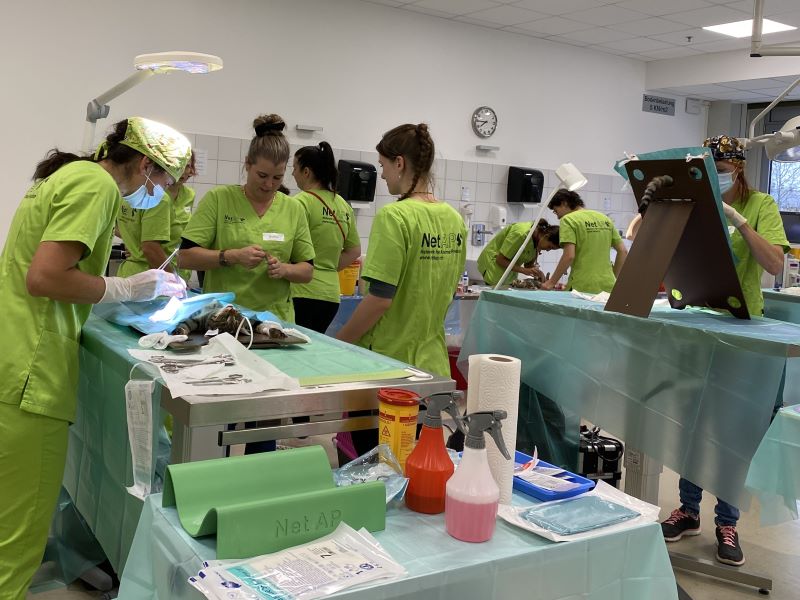
On 25 October 2025, the first major neutering day of the 2025/26 winter semester took place at Covetrus in Lyssach. Over 40 people were involved. Vets, veterinary assistants, trained helpers, catchers, drivers – there were so many tasks to cover. 92 cats (51 female and 41 male) went through our programme and were able to start a healthier life with less stress. In addition to the cats that our team had caught, we also examined, treated, vaccinated and neutered cats from Tierschutz Emmental, Katzenhilfe Bern and CatsInn. All cats that needed further help naturally received it. All cats were able to return to their territories the day after the operation, except for one female cat who needed a complete dental restoration a few days later.
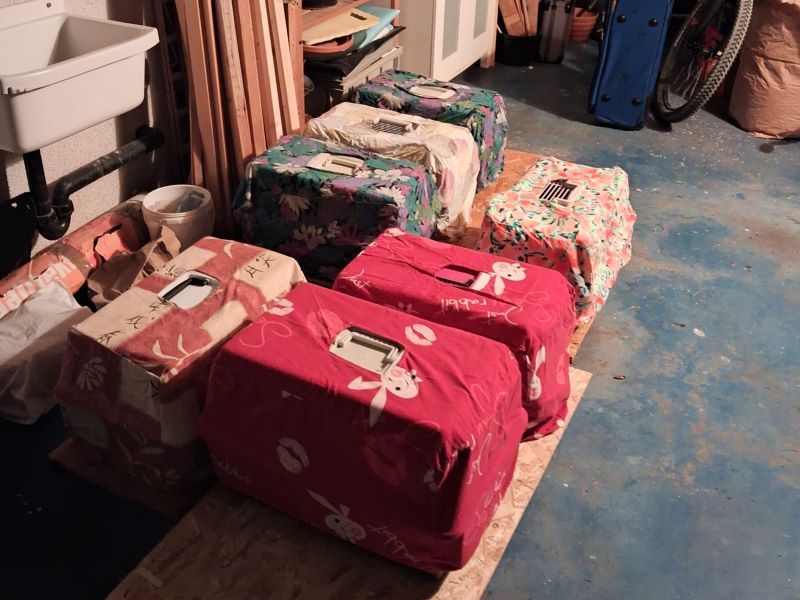
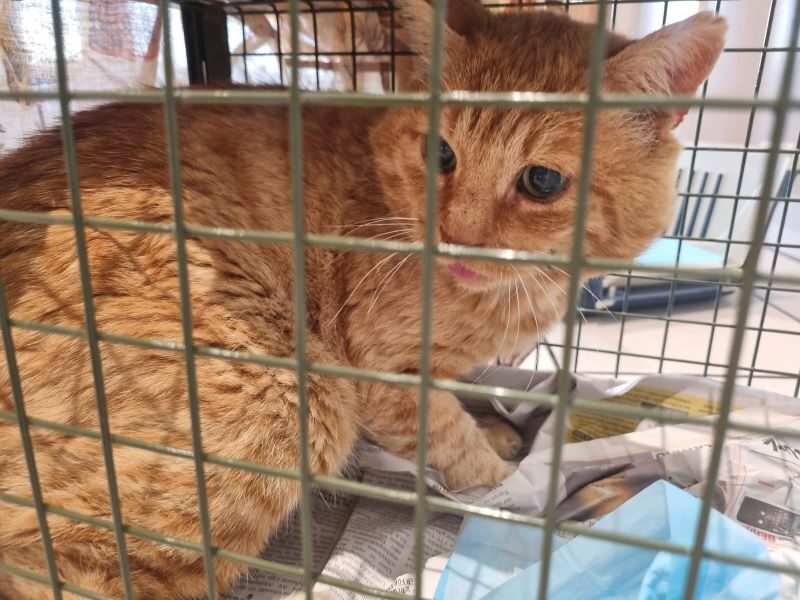
We had to rescue two cats in an emergency in the municipality of Aesch. The first was reported because of an abscess. We caught the unneutered tomcat immediately and found that he was seriously injured and already had countless maggots in his wounds. We took him straight to a veterinary clinic, where he was admitted and given intensive care. Contrary to the prognosis, he is now on the road to recovery. A day later, we caught another unneutered male cat whose teeth were so rotten that only a complete dental restoration could restore his well-being. Both cats had been known in the neighbourhood for years without anyone wanting to take responsibility for them. Apparently, there are other abandoned or stray cats in the neighbouring forest. As soon as we have some time, we will investigate the situation more closely.
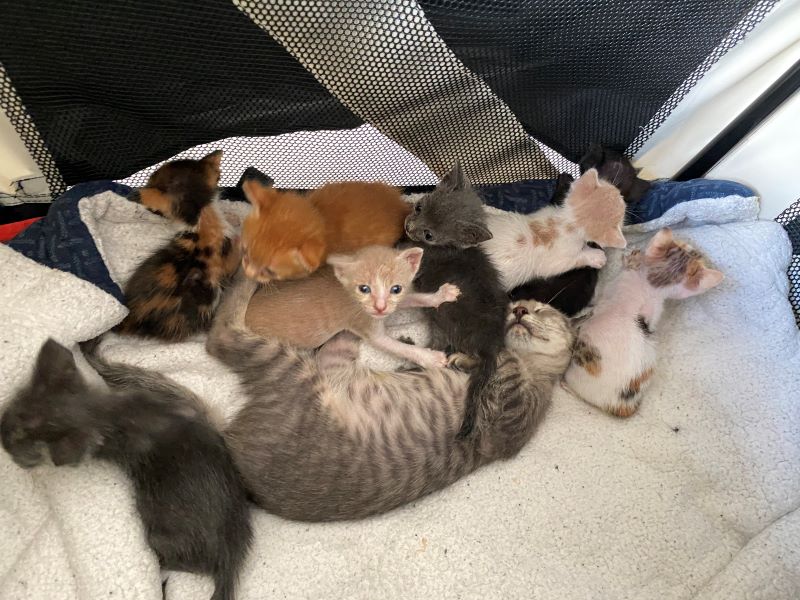
Completely malnourished and sick, with skin fungus and an infection, 13 kittens from four different mothers were found near a church in Zurich city centre on Monday night, 9 September 2025, and taken to the veterinary hospital. According to the person who found them, a dead adult cat was lying on the road, run over. Unfortunately, it was disposed of immediately, so it was not possible to check whether it was one of the mothers.
The veterinary hospital sought help and finally found it in Steffi Fontana from the Strubeli animal shelter. All the other animal shelters that were asked did not have the capacity to take them in. Strubeli, in turn, asked us for help, as it was already full of emergency cases. Thanks to our network, the first four kittens were able to move to a very experienced foster home run by Katzenfreunde Schweiz (Cat Lovers Switzerland) the very next day. One kitten fought for survival at the veterinary hospital for longer, but was then reunited with its siblings. Some can already eat on their own, while others still need to be bottle-fed regularly. The oldest kitten is about three months old and has been forced to take on something of a protective role.
The city of Zurich has kept us busy this year. We have had to rescue several mothers with kittens, as well as abandoned or feral adults. In addition, we have had to catch countless unneutered cats in allotments. Cat misery is no longer just a rural problem.
These 13 little creatures, who did not ask to be born, had a very bad start in life. We are now joining forces to try to rectify this so that they have a good future ahead of them. We have filed a criminal complaint against persons unknown. Even if the chances of finding the perpetrators are slim, it is still important not to simply sweep this crime under the carpet, because such massive neglect followed by abandonment constitutes animal cruelty. We are also very concerned about the mothers, who are probably just as sick as their offspring and who may well be expected to give birth again soon.
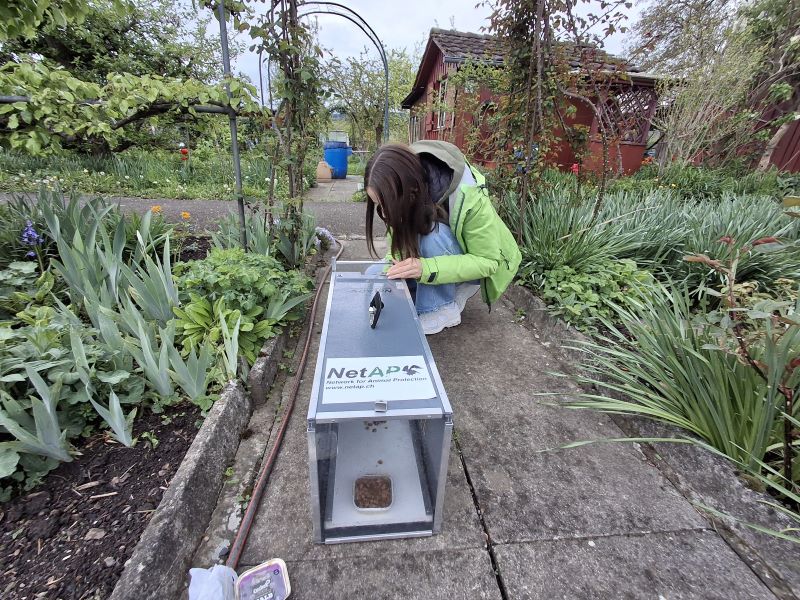
Over 50 cats were caught, treated and neutered in the Juchhof allotment gardens over the course of the year. A team from ProTier caught the cats in one part of the gardens, while we worked in the other part. Together, we managed to neuter all the cats except those that had a proven owner who refused to have them neutered. In the absence of a neutering requirement, we had to accept this, even though it made our work more difficult. Time and again, these cats triggered the traps and we had to release them without having achieved anything. Allotment gardens are always a big challenge because there are so many parties who want to have their say and sometimes even sabotage our work. Usually, no one contributes to the costs and there are always cats that need far more than the standard programme.
We left the cameras running for quite a while so that we can assume we caught all the cats. At least until new unneutered ones are abandoned again.
It was an extremely sad case that led us to the Willisau constituency in the canton of Lucerne. The farmer’s daughter had asked if we would perform free neutering operations. The veterinary office had just been there and recommended that they have the cats neutered. When we visited the site for the first time shortly afterwards, we noticed several sick, emaciated cats covered in parasites. Almost all of them were tame, and we immediately took the first, very sick ones with us to have them treated by a vet. Unfortunately, it was too late to help one of the female cats.
None of the cats had been neutered. It quickly became clear that the mortality rate on this farm must be high, given the desolate condition of all the cats. We were told that many cats had disappeared because the fox had allegedly taken them. But a fox does not catch healthy cats.
They didn’t want to pay for the cats. They said they couldn’t afford it. So we had them sign an agreement that we would not return sick cats or cats that could be rehomed. We looked for animal shelters and associations specialising in rehoming that would take the cats as soon as they were reasonably stable. However, many of the cats need intensive care, additional operations and medication to survive. The owners were unreasonable and did not understand why we were no longer bringing them cats. They even suggested that we should simply bring them healthy cats instead of their sick ones.
We took away a total of 40 cats and brought back two animals (the most stable of them all) with the request that they be treated regularly for parasites. Due to the immense neglect, we finally filed a criminal complaint in the hope that this tragedy would not be repeated.
We have put in over 400 hours of volunteer work on this case. We have travelled more than 500 kilometres and invested almost 20,000 Swiss francs in the 40 cats. None of this would have been necessary if the authorities had reacted sooner. But if you don’t want to see the suffering, nothing happens.
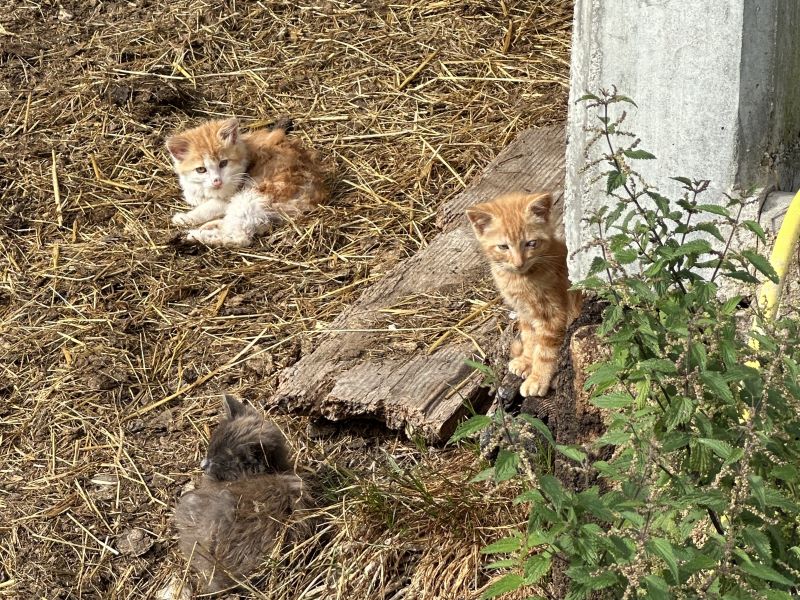
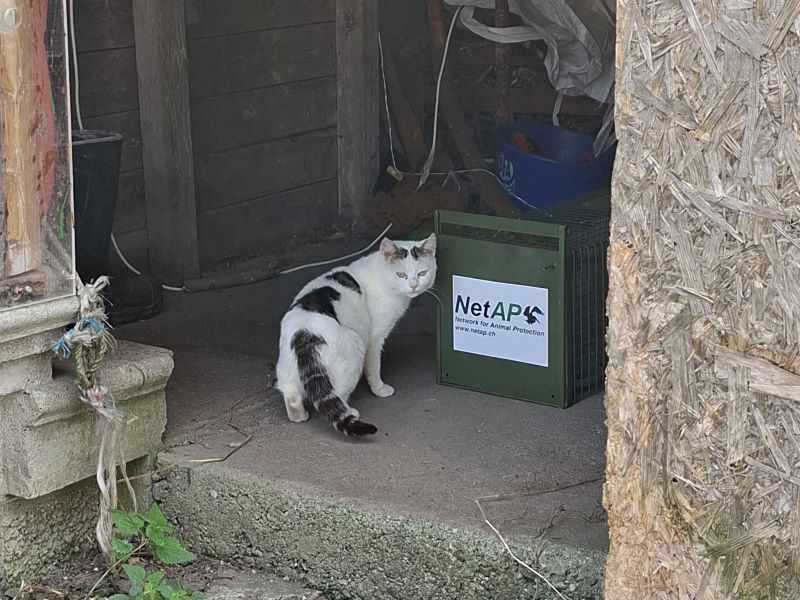
Through a veterinary practice, we learned of an elderly woman in Entlebuch who kept countless unneutered cats. The uncontrolled reproduction worried the person who reported it. She had actually given the woman our telephone number so that she could contact us, but unfortunately that did not happen.
Since we didn’t get her telephone number, we simply dropped by. She was at home and was delighted with our offer to have her cats neutered. She obviously hadn’t dared to ask for help.
There weren’t quite as many cats as the practice had suspected, but still too many to do justice to them all. We suspect that many had migrated, because the case was well known in the neighbourhood and people were glad that we were taking care of it.
All cats were examined, treated, vaccinated and neutered at the Mittelland Veterinary Clinic. We were able to hand over a mother cat with four kittens to the Romanshorn Animal Welfare Association. We left some food behind for the cats that were returned. The owner was very grateful, as she was in debt herself and could only afford the bare necessities.
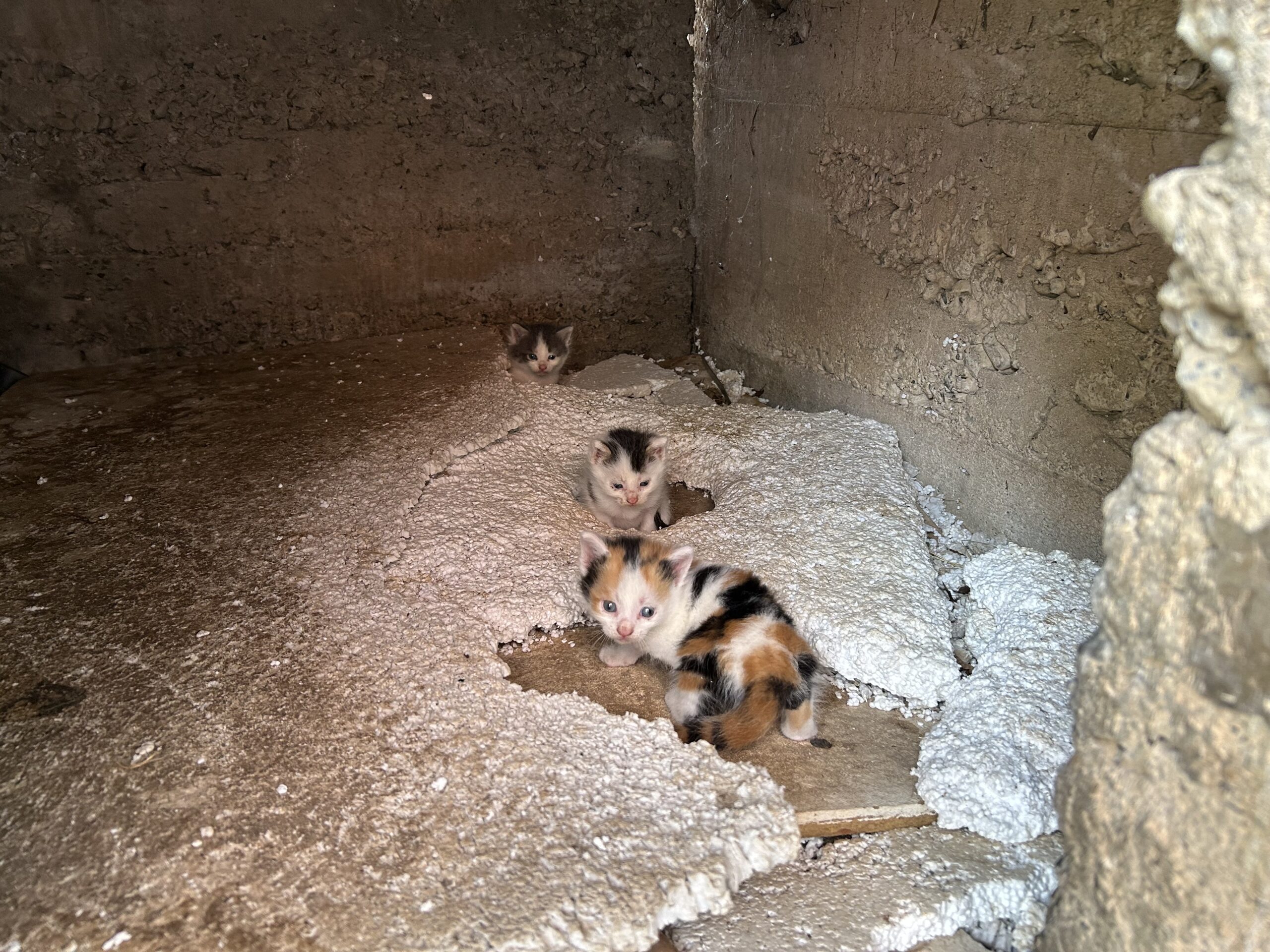
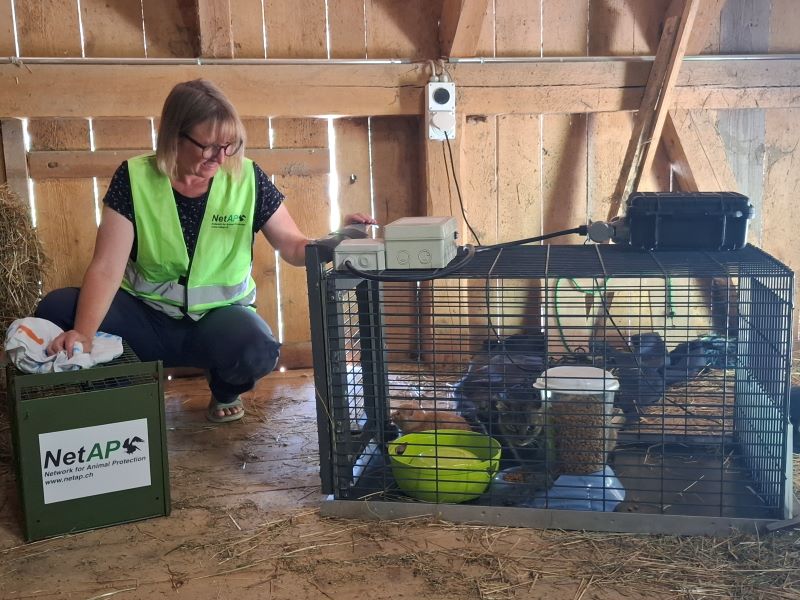
An employee at a farm in Rosshäusern reported a stray tomcat that regularly marked its territory. The farm owner wanted the cat removed immediately. They did not want any cats on the farm.
Since a female cat had also settled there, we set up a feeding station and installed a surveillance camera, as we suspected she had kittens. We were right. So we caught both the male cat and the family and relocated them all, as the person who reported them wanted to leave the farm and no one would be looking after the cats anymore.
In a garden in Zurich, a local resident suddenly discovered a skinny mother cat with two kittens. Where they came from was a mystery, as it was actually a cat-free neighbourhood. The lady reported it to STMZ and tried to get help, but no one seemed to have time. Another animal welfare organisation advised her to feed them, distribute flyers and get the pill from the vet or, if she didn’t want to, chase the animals away with a water hose. Was there a misunderstanding? We weren’t there. But the fact is that in many cantons, we are the only ones who go out to catch them. That’s why we are inundated with reports!
We only found out about it by chance. But it was clear to us that immediate action had to be taken. The little ones were at an age where they could still be tamed, and their mother could well already be pregnant again or would be soon.
So we drove there that same evening and were able to rescue the mother and one kitten. The mother was spayed the very next day. The following day, we were also able to rescue the second kitten, and the whole family moved into the Strubeli animal shelter.
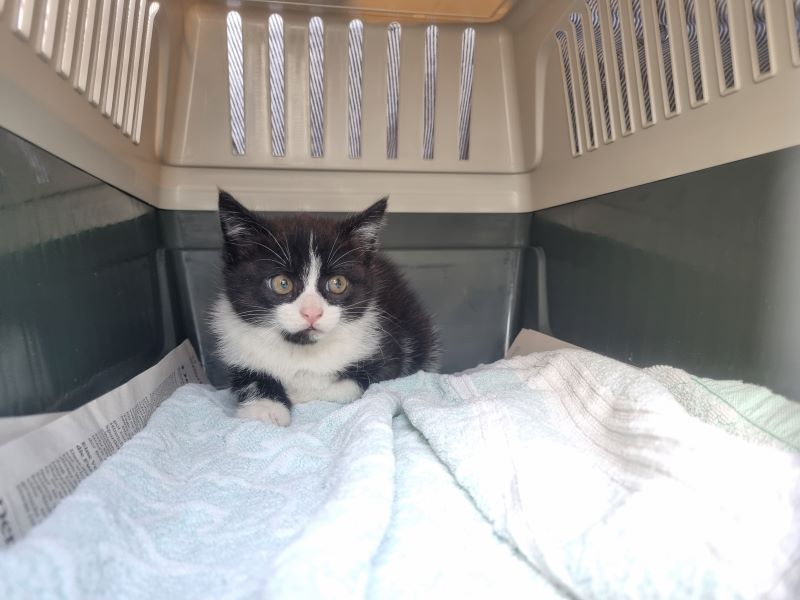
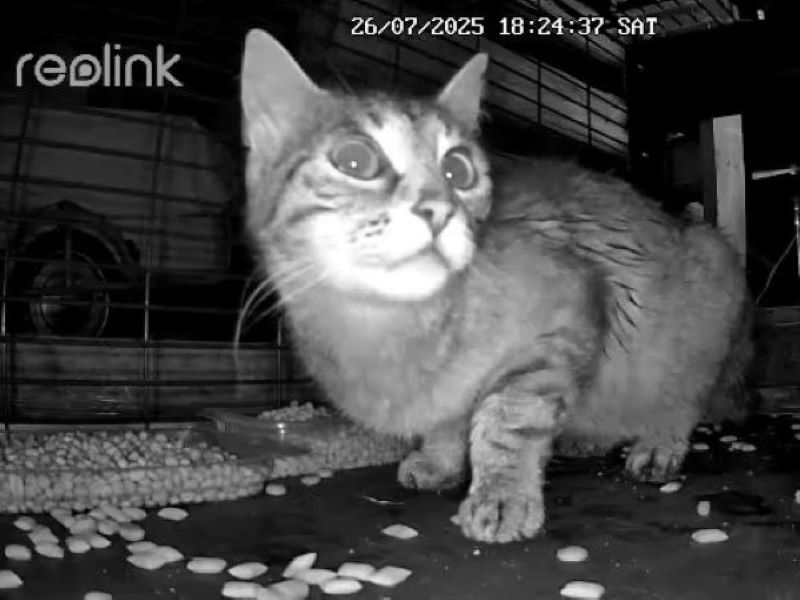
In mid-June, we were informed by an employee of a veterinary practice about a case in the Grisons region. A feral cat with four or five kittens had settled on a farm. The farmer did not want them. His own cats were all neutered. He was considering how to get rid of all the cats. Would we be able to help? Unfortunately, we do not have any volunteers or partner practices in this area. It takes us two hours to get there, and then we would have to drive back again.
Apparently, however, no one locally felt truly responsible, so one of our cat catchers travelled to the Bunde region at the weekend to bring a trap and take a closer look at the situation.
Unfortunately, everything seemed to be conspiring against us: the kittens never appeared on camera and the farmer had never seen them again either. However, the local vet did not want to spay the mother while she was still lactating, which is why we hesitated to catch her. At some point, a tomcat was seen mating with the mother cat, so it was safe to assume that she would become pregnant again. The veterinary practice was also quite inflexible when it came to appointments. Sterilisation was only possible on two days a week and only if the cat was brought in early in the morning. The fact that we all worked full-time far away and couldn’t beam ourselves there spontaneously seemed to be our problem alone…
Finally, we caught the mother. At the vet’s, she was put under anaesthetic and then we got the news: she was pregnant again and therefore would not be spayed. No one knew what to do with the feral cat. The local council had agreed to pay for the neutering (in Graubünden, many local councils cover the cost of neutering stray cats, which is commendable), but not for accommodation. And because this particular council did not have a service agreement with the local animal shelter, the shelter was not prepared to take the cat in free of charge. We were told that it would cost over 4,000 Swiss francs… (with a service contract, it would have been free of charge).
The council made the brilliant suggestion of releasing the cat back into the wild. They said she could be recaptured later, along with her kittens. Hadn’t we been through this before? We also had a pretty good idea who they meant by ‘they’. So there we were, with a stray cat that they didn’t want to neuter at first because she was still lactating, then because she was pregnant again, and for which none of the parties involved had a real solution. So we took her with us and found her a home in the canton of Zurich. We named her Sava. At the animal shelter, Sava was so stressed that she tried to escape every night and scratched her paws until they bled. After several nights like this, it was clear that she would not accept the kittens under these circumstances. So we had her spayed after all, and a few days later we brought her back to her territory, where she immediately relaxed and can now look forward to a stress-free life.
We received a report of a cat population totalling nine animals on a farm in Freimettigen in the canton of Bern. Three female cats and six kittens. The farm owners took good care of the animals and showed great interest in finding a sustainable solution for the cats. Two mother cats, who were already heavily pregnant again, were temporarily placed in foster homes so that they could give birth to their future offspring in peace and safety. Fortunately, the kittens that had already been born were old enough to find new homes.
One female cat has already been examined, spayed, vaccinated, microchipped and treated for internal and external parasites before being returned to the farm. The two expectant mothers will also be spayed after raising their kittens and then returned to the farm, where they will continue to be well cared for. We are always very happy when local people help out and take good care of the cats.
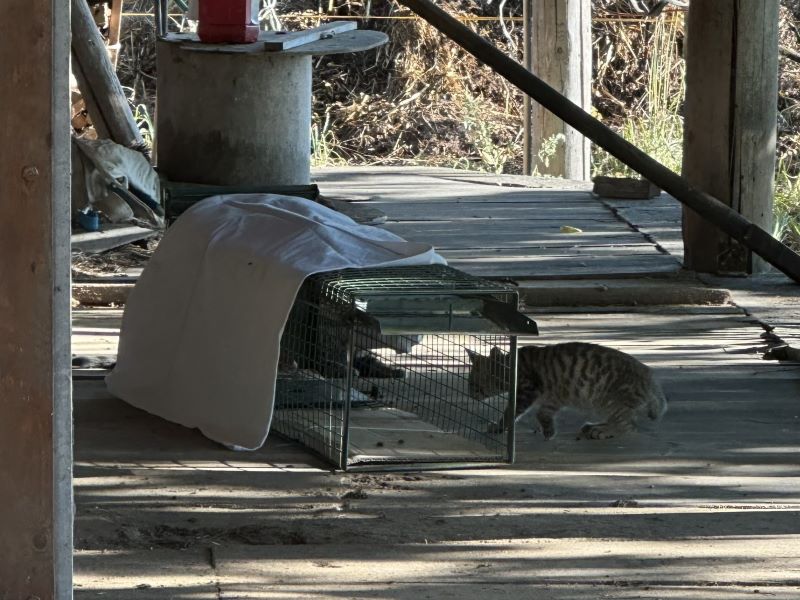
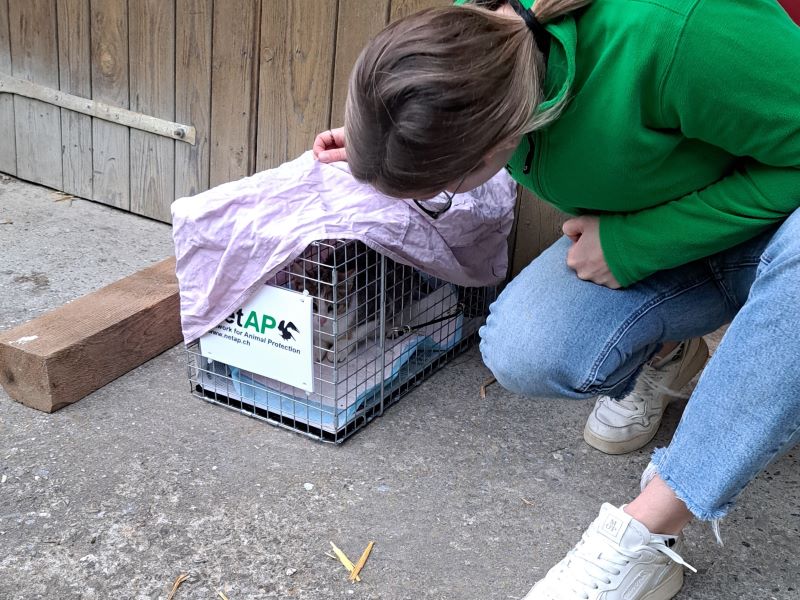
The other case we closed in Heitenried was anything but cheerful. Heitenried in the canton of Fribourg is a hotspot for cat misery. We have lost count of how many times we have been called out there. We have caught hundreds of cats, spent thousands of hours on site, and spent thousands upon thousands of francs to alleviate at least some of the misery. There is no help from the state. None whatsoever!
In this case, we received a report of a mother cat with kittens that had wandered onto a remote farm. The Bern team immediately set up a feeding station and installed a surveillance camera. The mother, father and four kittens were visible, along with foxes and martens. We quickly arranged veterinary appointments and were ready to go. But then, to our horror, the kittens had disappeared. Suddenly, the kittens had disappeared. A desperate search began…
Four days later, two of the kittens were spotted in a basement and finally it was possible to continue. Eventually, the mother, father and, on Wednesday, the last kitten were rescued.
Dad has a bad cold. The very wild tomcat now has to spend ten days in quarantine and undergo intensive treatment before he is allowed to return. Mum and the kittens will remain under supervision for a while until the kittens are old enough to be rehomed. However, they first have to be tamed, and that will take a lot of time and patience.
Cases involving mothers and young kittens are so complicated. Those responsible are never held accountable. It is the cats and us, the observers, who have to deal with the consequences. Seven days of intensive work for three volunteers for six cats. Because the state always looks the other way.
A mother cat and her kittens were reported in an industrial area in Sarmenstorf in the canton of Aargau. The kittens are already quite wild, and it will be a challenge to tame them.
A night-time operation from Monday to Tuesday was necessary to secure them all. Three kittens and the mother cat. On Tuesday evening, one of the kittens – the last one that could be secured – suddenly became very apathetic, so it was immediately taken to the veterinary clinic as an emergency.
This mother also has her origins in an irresponsible owner who, protected by our centre-right politicians, continues to cause misery without being held accountable.
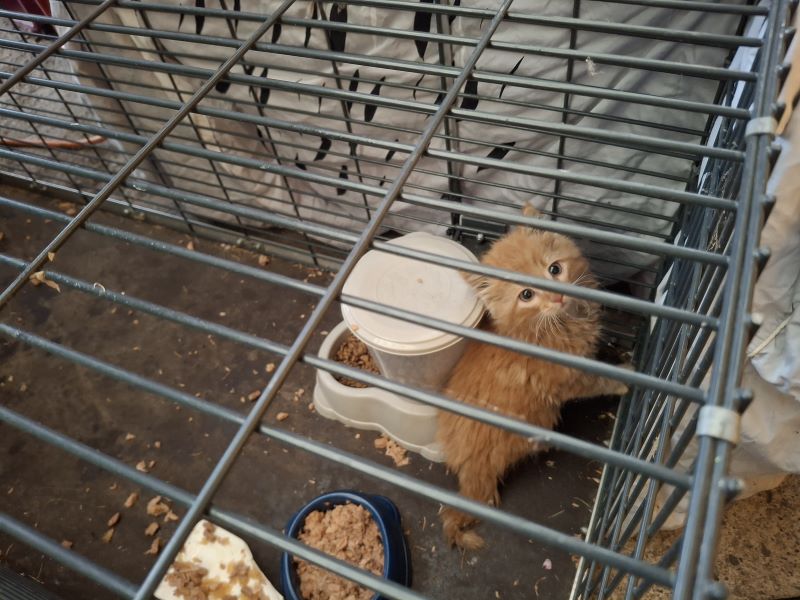
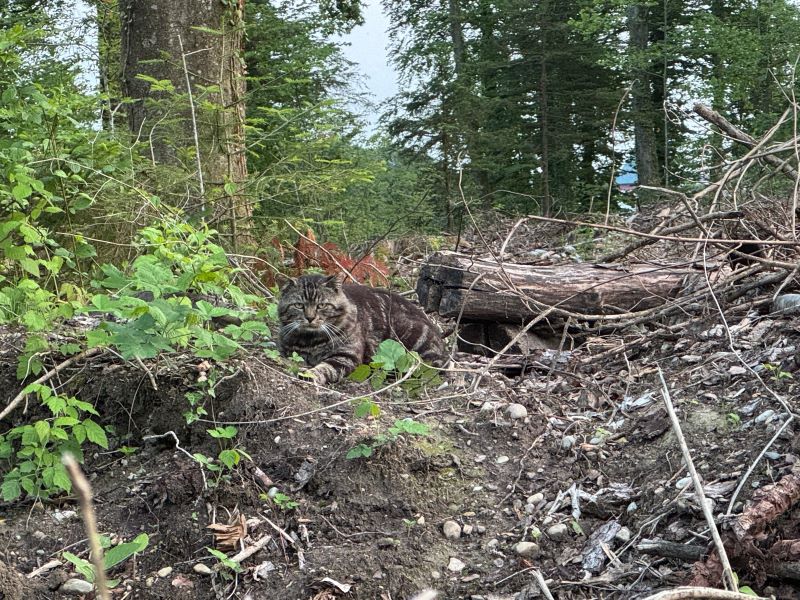
Another organisation asked us to take on a case in Illnau in the canton of Zurich. Two cats had been left behind by an elderly couple. Although we were initially assured that the cats would be allowed to return after being neutered, this was not the case. In addition, the cats had become feral, so no animal shelter wanted to take them in. We therefore had to find a place to release them into the wild before we could begin.
The start was already difficult. We had to wait almost a week before the company that owns the site finally granted us permission and access to set up a feeding station and place the traps. Unfortunately, there was no one on site to help look after the feeding station, so we had to make the trip to Illnau every day after work. The two cats only appeared irregularly, so everything took a long time. Finally, after a week, both cats were secured. As the male cat was limping, he also had to have an X-ray. Fortunately, no operation was necessary, but his teeth had to be repaired. The female cat still had milk, even though no kittens had ever been seen. With a large search party, we therefore combed the entire area for several hours in the evening. In vain. We informed gamekeepers and hunters, but they had never seen any kittens either. However, we learned that another animal welfare organisation had already tried to catch the female cat the year before, but had given up far too quickly. We fitted her with a transmitter and released her again, but this time she was neutered. However, she did not lead us to any kittens and never stayed in the same place for long. Whatever had happened to the kittens, they remained missing.
A week later, we caught the mother again. The two were happy to be reunited and were able to move into the reintroduction kennel together. Neutered, vaccinated, treated for parasites, microchipped and with healthy teeth, they are now getting used to their new territory, where they will be welcome in future.
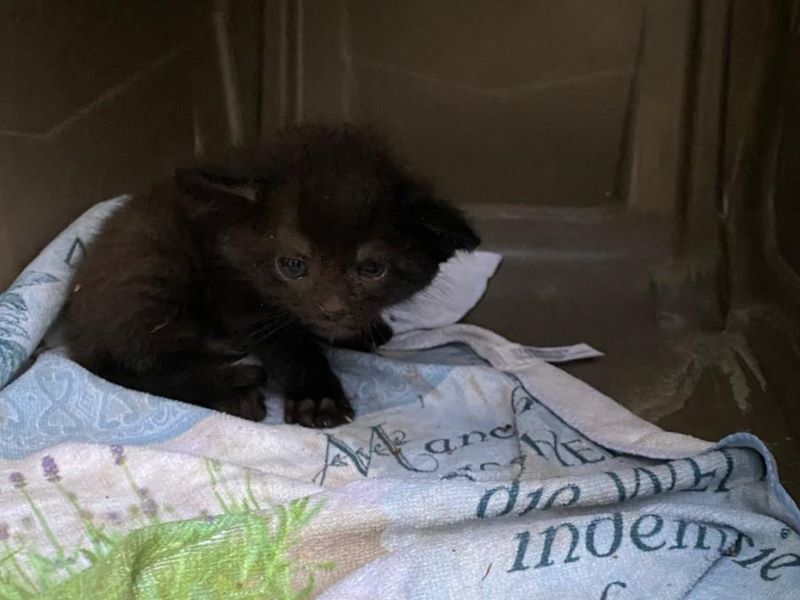
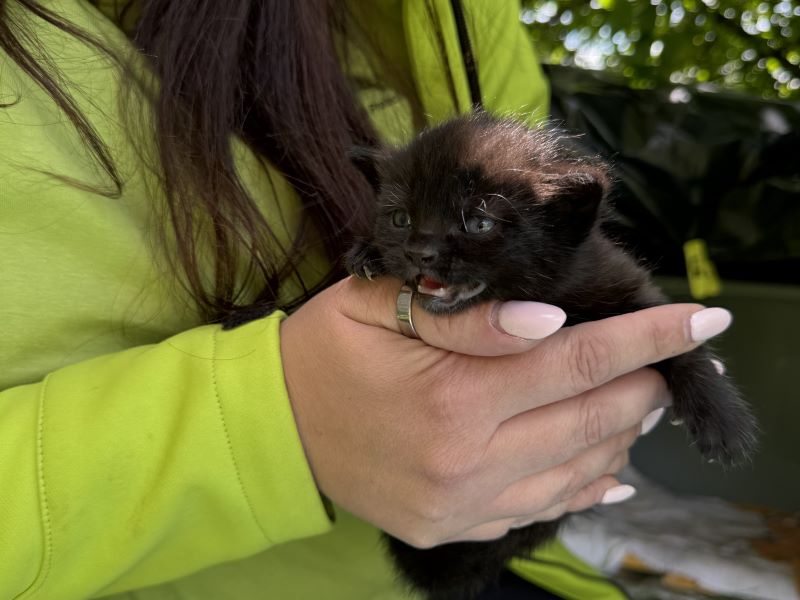
A nun discovered a feral cat mother with her kittens on the monastery grounds and contacted us. She was very concerned about the animals due to the persistent rainfall. We drove there immediately and were able to quickly rescue both the kittens and their mother. Fortunately, we already had a good place for the family at an animal shelter, where the mother can continue to raise her kittens in peace and safety. Cases don’t always go so smoothly. But when everyone pitches in and we have such kind people reporting them, cases like this are a real joy. And maybe a higher power brought us some extra luck in this case, who knows. It remains sad that there are so many homeless cats who have no one and are only there because irresponsible owners have not had them neutered.
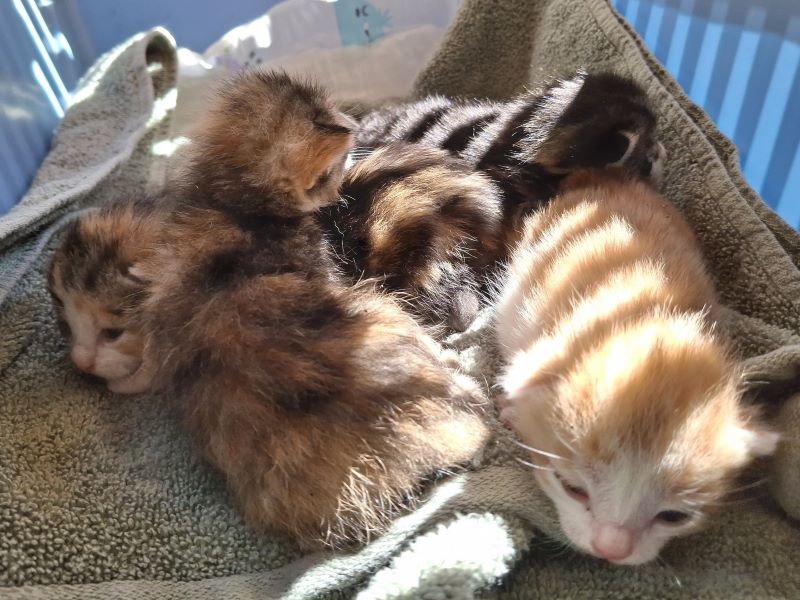
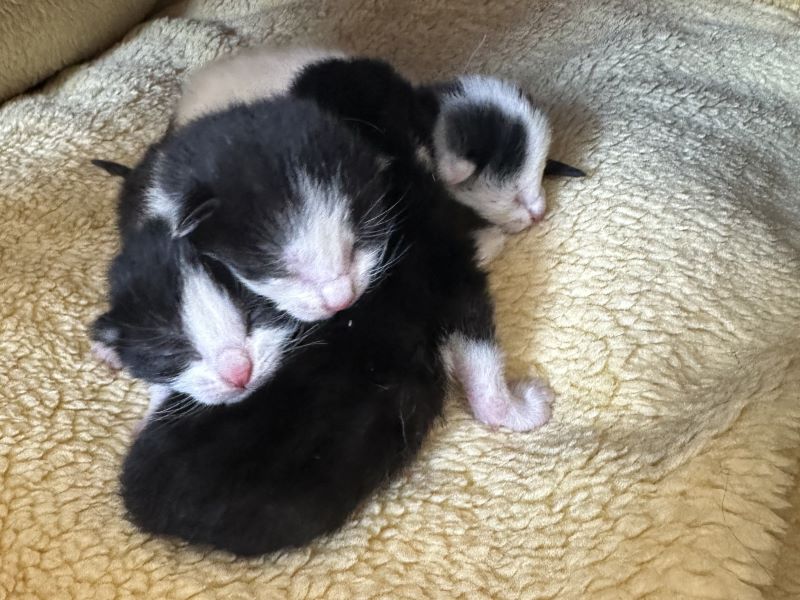
Marbach in Entlebuch is not really on our way. But unfortunately, as far as we know, there is no animal welfare association in the canton of Lucerne that goes out to catch mothers and kittens. He tried various associations and was referred to us. A feral mother cat had given birth somewhere and the people who reported it were worried.
We set off on our journey. Fortunately, everyone on site was very helpful. Because the mother had already been well observed, they knew roughly where the kittens were hiding. And when it became clear that they were behind numerous hay bales, the farmer took the time to remove them all. This allowed us to quickly rescue the kittens, which were only a few days old. The highly intelligent mother kept us in suspense. She went into the trap twice, ate with appetite and avoided touching the footboard that closes the trap. It only worked on the third attempt. We took the family to a foster home. The mother will be allowed to return after being spayed if she does not become tame while raising her babies.
They were said to be wild, sick, unneutered and had to go. Around 15 cats from a death in Bern-Mittelland. The deceased had been a hoarder, the heirs had refused the inheritance and wanted nothing to do with the cats. There was no money for the animals.
The animal welfare organisations that were asked for help were unable (or unwilling) to take on the case. The police were unable to catch even one of the cats and passed the case on to the local authority. The local authority finally contacted us in desperation. We agreed to help before we had a chance to look into the situation in more detail. After all, lives were at stake.
When our Bernese coordinator visited the site, she was pleased to discover that the situation was not as dire as we had been led to believe. The deceased’s landlords – farmers – were very kind, helpful and grateful that we were taking on the case. They were already feeding the four-legged survivors and were also willing to take in a few of them, so we didn’t have to find new homes for all of them.
She counted eleven cats during her time there. She was even able to stroke a somewhat bedraggled tomcat. We assumed that the animals were not feral, but merely disturbed. No wonder, when your caregiver dies and you are suddenly no longer allowed to go home because the apartment has been sealed off.
Just one week later, our team had caught all the cats, had them examined by a vet, tested, vaccinated, microchipped and neutered. Most of the cats were in excellent health. Some were taken to animal shelters, while others were allowed to return to the farm, where the farmers will take responsibility for them in future. The community was very satisfied with our work. We asked if there might be a few francs left in a collection box that they would like to pay towards the vet’s bill. We are excited to find out.
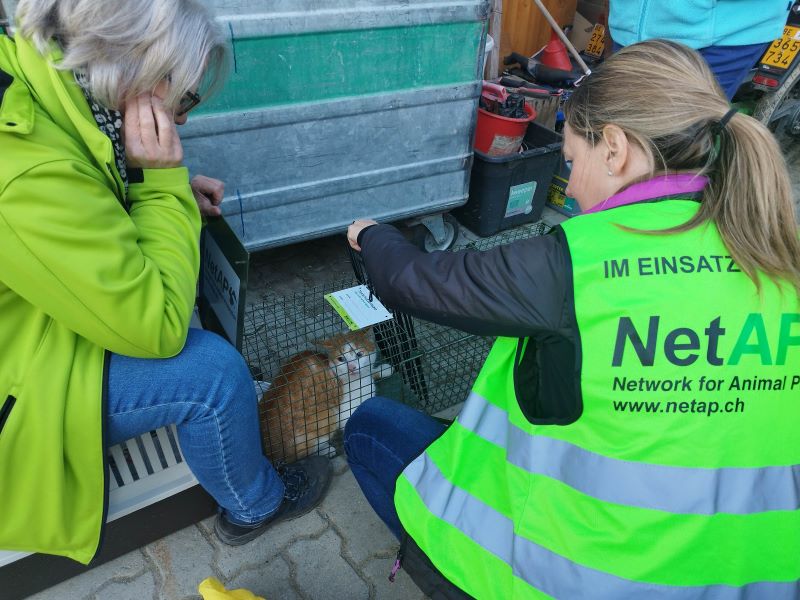
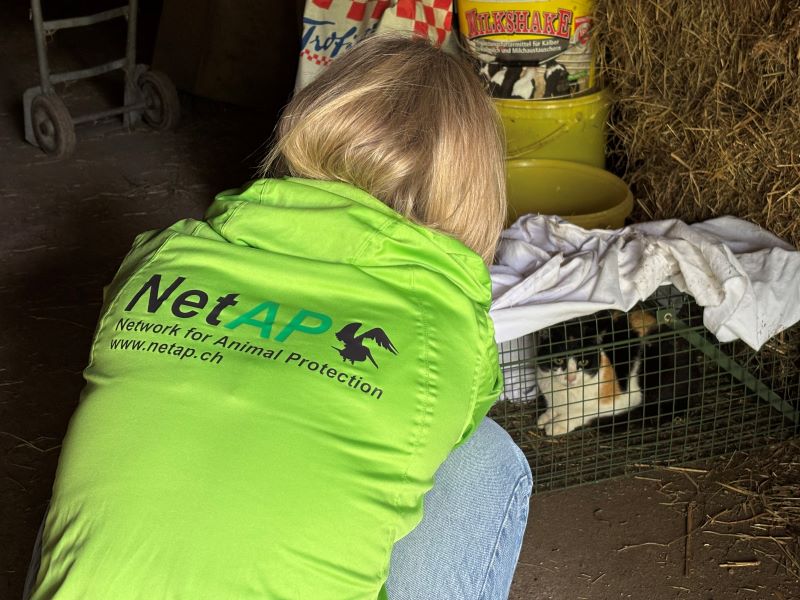
We were called to Mamishaus in the canton of Bern due to another death. We had already neutered all the cats on four farms there in 2021. Now one of the farmers had died, leaving behind eight cats that nobody wanted.
Fortunately, the Marfeldingen animal shelter offered to help us, so we were able to catch the cats, get them veterinary care and finally temporarily house five cats at the shelter. A neighbour offered to help us with the other three, on condition that we would provide food and medicine if necessary. As places for feral cats are very scarce, we agreed to the deal. We are still looking for homes for the five feral cats at the shelter.
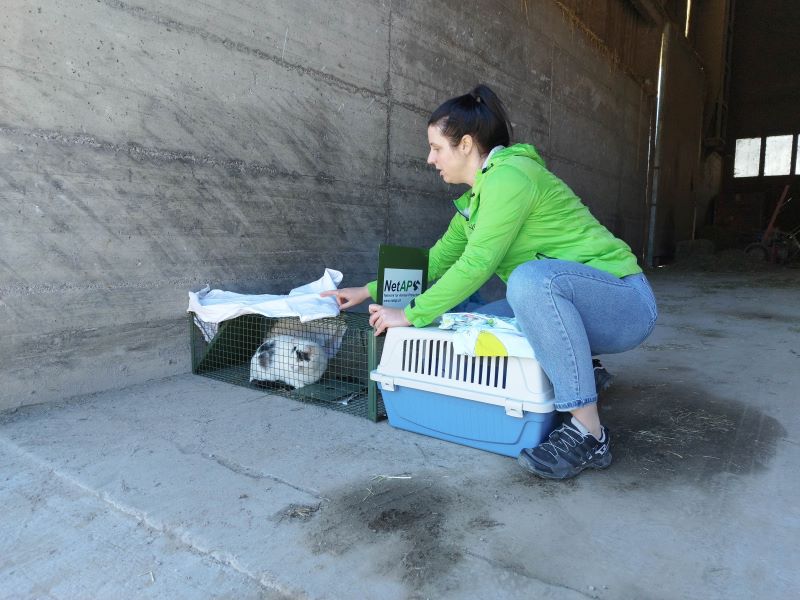
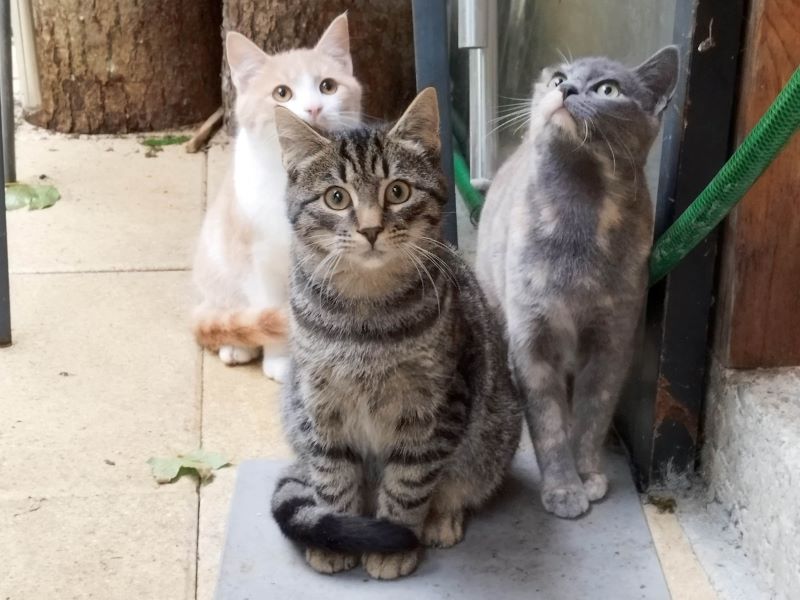
Originally, the person who reported the cats wanted us to pick them all up and relocate them elsewhere. Unfortunately, however, rehoming feral cats is a difficult task. And since the cats are well monitored and adequately fed on site, we were able to convince the person who reported the cats to take them back after they had been neutered, vaccinated, microchipped and treated. The three male cats and two female cats were all in good health and were allowed to return to their territory the day after the treatment.
We were made aware of the farm in Uettligen, where cats had been breeding uncontrollably for years, last year. At that time, the locals were not interested in neutering the cats. However, it became apparent that constant pressure does have an effect, and the elderly farmer finally accepted our help. At first, he didn’t want the cats back at all, but we quickly made it clear to him that semi-wild or wild cats are difficult to rehome and are best kept in their original territory. Besides, he himself was to blame for the large number of cats. Seventeen cats were caught very quickly. Only the last female led us on for a month until she was finally caught and could also undergo the neutering programme. Of the 18 cats in total, eleven were females. It doesn’t bear thinking about what would have happened if they had all had kittens in the spring.
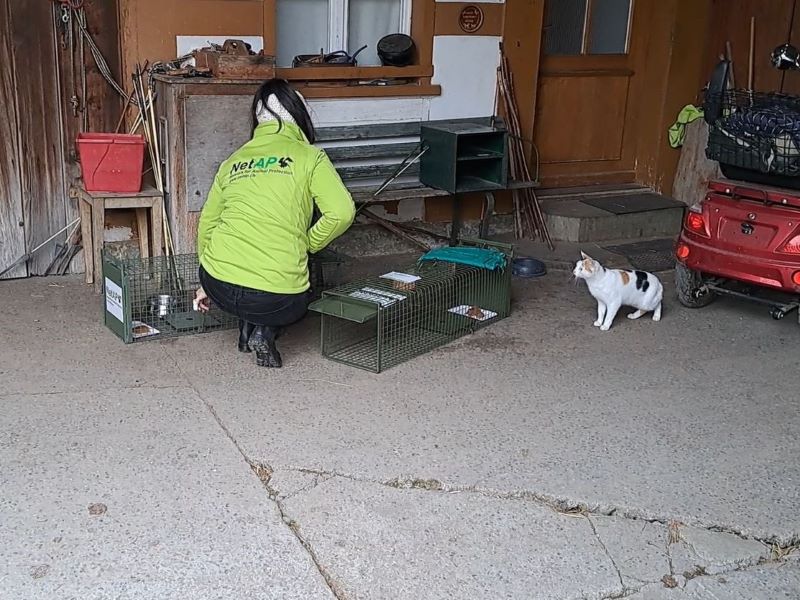
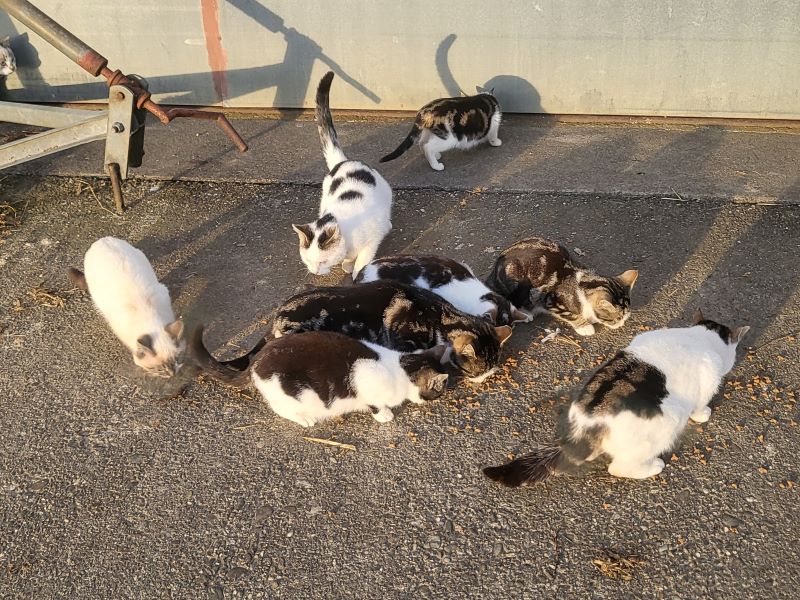
Almost 30 cats were romping around in the yard in the district of Laufen. The farming couple had not done anything about the overpopulation for far too long. The kittens were given away, but at some point it all became too much for them. The TBB Foundation asked us for help, because at this time of year, speed is of the essence. Many female cats are in heat, some are already pregnant.
Our Basel team immediately took on the case and caught all the cats over the weekend. On Monday, all the animals were examined, treated for internal and external parasites, neutered, vaccinated and microchipped. Fifteen cats returned to the farm on Tuesday, and fortunately we found other options for the rest. The farmers would have preferred to take back only five cats, but that is unrealistic. There are so many cats looking for a new home that they should have reacted much earlier. At least now peace and quiet will definitely return to this farm.
The TBB Foundation was delighted with our swift action: ‘Wow, and wow again! Thank you so much for your highly professional and efficient commitment!’ wrote the animal welfare specialist responsible. Such wonderful praise makes us even more eager to help. ‘Together’ is the magic word that makes so much easier in animal welfare. Together for the welfare of animals!
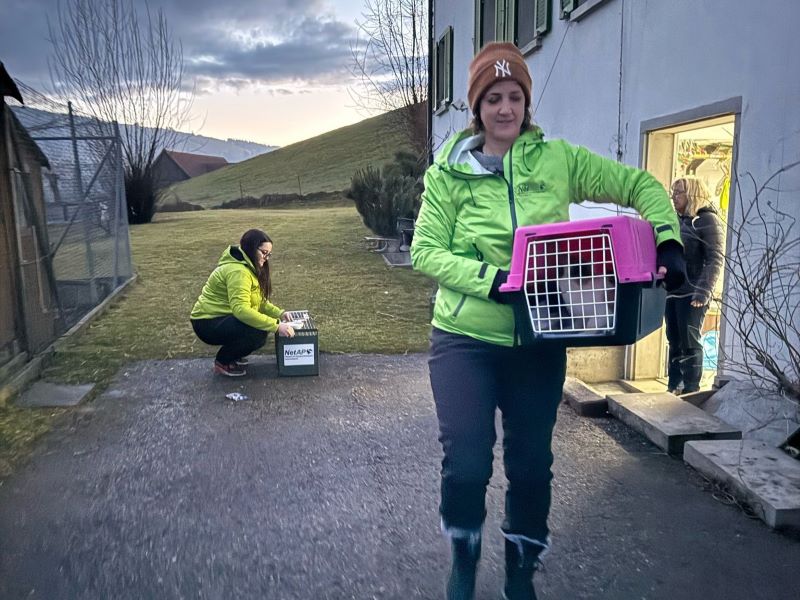
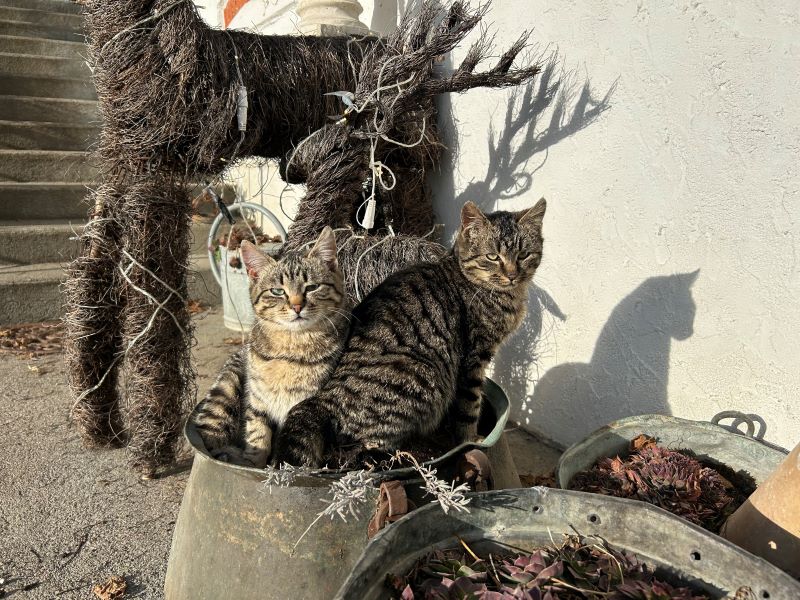
Once again, we were on duty in Hohenrain. While walking her dog, one of NetAP’s volunteers noticed a farm with many unneutered cats. It turned out that the farm was already aware of the possibility of calling on NetAP for help with neutering the cats. However, they had not yet been able to bring themselves to do so. Our volunteer managed to convince the farmers in a direct conversation to have all the cats undergo the neutering programme. Fortunately, because they had actually wanted to reduce the cat population on site for a long time. Luckily, we found places in animal shelters for eight of the cats. New homes are being sought for them. The four feral cats went back to the farm. Another farm where the cycle of misery came to an end.
Last year, a female cat strayed into the yard of a farmer in Oberrüti, Aargau, and gave birth to six kittens in the summer. One day, while chatting to the cashier at Landi about the many unneutered cats, she learned that NetAP takes care of feral cats, catching them and having them neutered. The farmer quickly got in touch with us and within a short time the six kittens plus another stray were caught. All of them have been through the NetAP neutering programme. Unfortunately, the mother cat has been missing for over a month. The farmer is keeping her eyes open and now knows where to report if the mother or a new cat turns up.
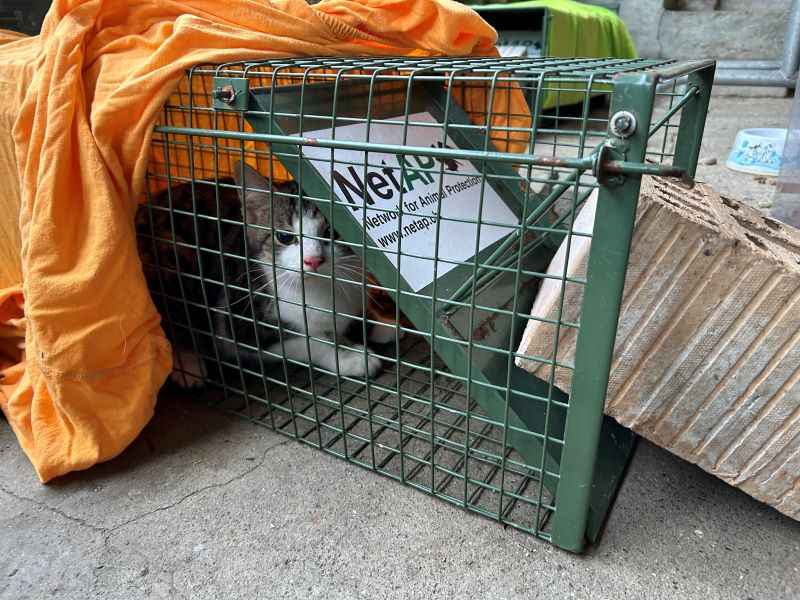
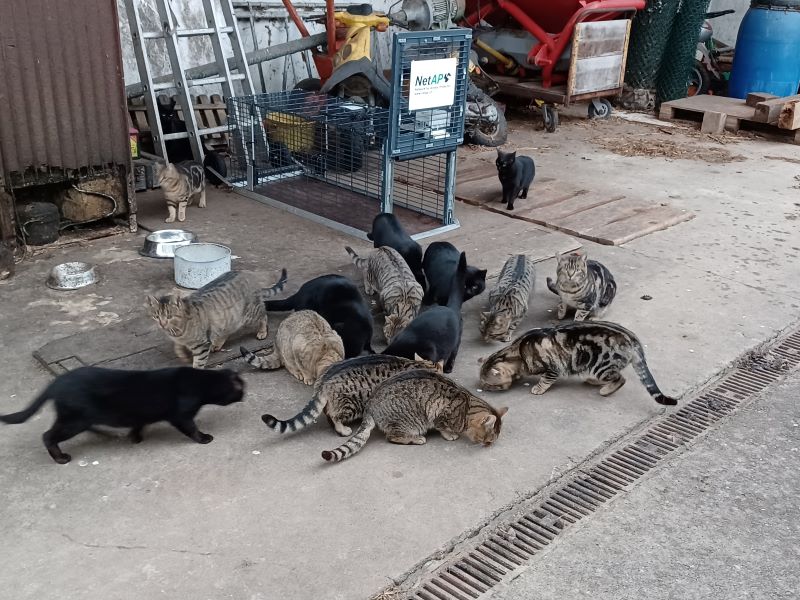
The Tierdörfli Olten animal shelter asked us for help with a case involving over 20 cats. It wasn’t easy to tell all these cats apart, as they were all either black or tabby. Fortunately, we were able to catch, examine, neuter, tag, vaccinate and treat them all for internal and external parasites in a single day. One patient had to be kept a little longer for dental treatment. But even he was able to return home to the farm a week later. The farmers were very impressed by our professional and competent work, but were unable to contribute to the costs.
For many years, the kittens were repeatedly passed on at a farm in Kirchlindach, Bern. Neutering was not an issue. However, a spontaneous visit from NetAP convinced the farmers of the importance of neutering all cats. On neutering day in Lyssach, the cats were neutered, examined, marked, vaccinated and treated for internal and external parasites. The farmers actively helped with the trapping. All the cats were healthy and well-fed and were therefore allowed to return to the farm the next day, where they are regularly fed and monitored.
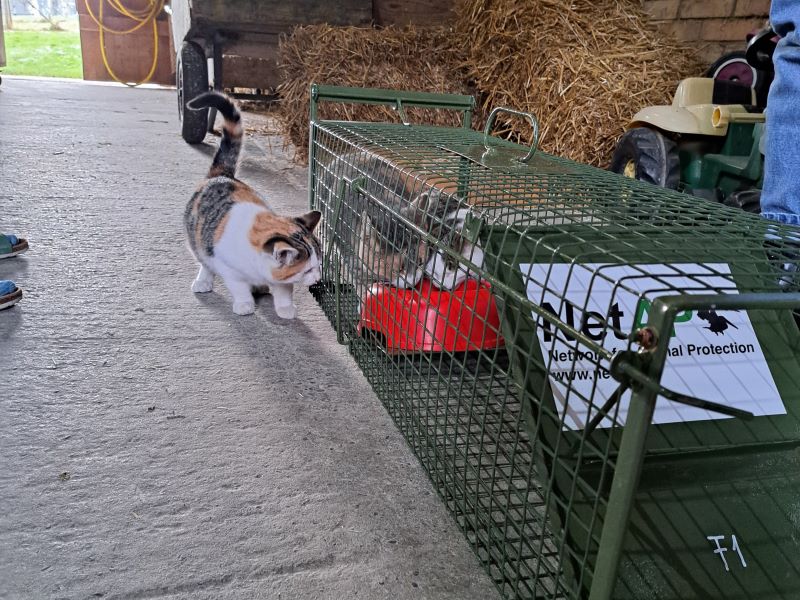
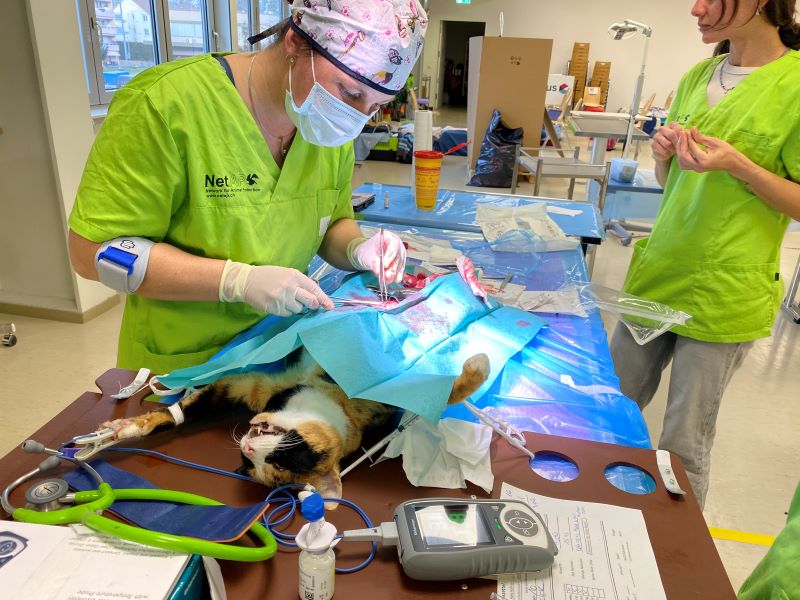
What a successful neutering campaign in Lyssach. We treated 115 cats, 60 of which were female and 55 male, although one of the males had already been neutered. It is rather unusual for the gender distribution to be so balanced. We usually have many more females than males on the operating tables.
On behalf of the Federal Food Safety and Veterinary Office (BLV), the Veterinary Public Health Institute at VetSuisse, University of Bern, conducted a study on the number of unattended cats in Switzerland. The study was based in particular on figures collected by NetAP for the year 2023. Uncontrolled reproduction of cats leads to major animal welfare problems. In Switzerland, neither the identification nor the neutering of cats is required by law. Accordingly, there is no data on the uncontrolled cat population in Switzerland.
The aim of the study was to estimate the number of uncontrolled cats (including both feral domestic cats and farm cats that are unneutered and inadequately cared for). In addition to data from animal welfare organisations, scientific data on the population dynamics of feral cats was compiled. A population model was used to estimate the impact of neutering campaigns and the carrying capacity of the habitat on population size.
The study estimates the number to be around 225,000 unattended cats. At the same time, the study shows that the size of the cat population depends more on the available habitat and food than on the neutering rate. Voluntary neutering can therefore help to reduce the number of unattended cats, but it is not enough as long as the cats have access to sufficient food and shelter. This is one more reason to enshrine compulsory neutering in law.
The study was published on the BLV website under the title: Report Estimation of uncontrolled cat population
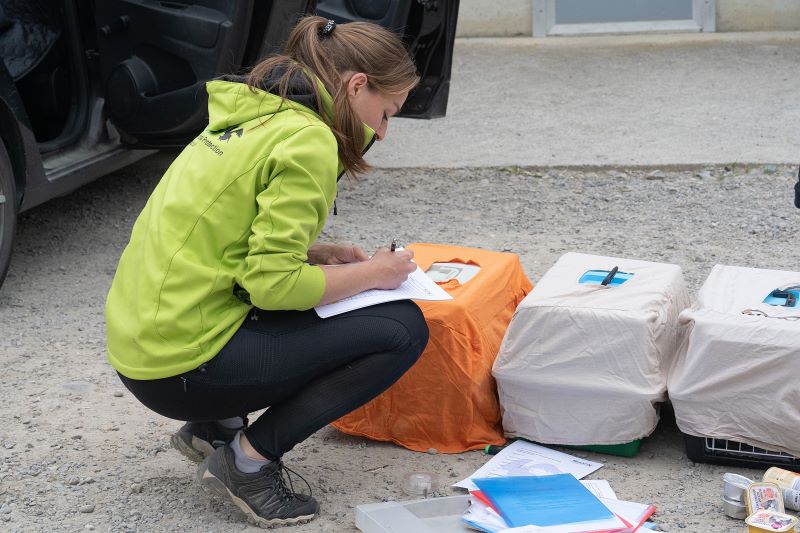
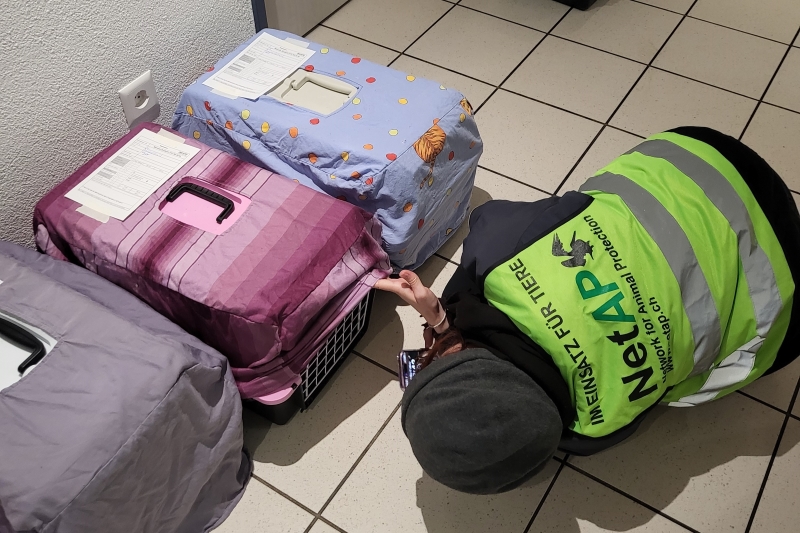
This was our 12th visit to the municipality of Mümliswil in the canton of Solothurn. Fourteen cats were living on the farm. Last year, the farmer did not want to have them neutered, so we were surprised and delighted when he called us to say that he now wanted all the cats to undergo the NetAP neutering programme. With the help of the farmers, the cats were caught in a record-breaking 30 minutes and then taken to the Mittelland Veterinary Clinic. There they were checked, vaccinated, neutered, treated for internal and external parasites and marked. They were all allowed to return to the farm, where a much less stressful life awaits them.
It was already the 10th neutering day that we carried out in cooperation with the Nidwalden Animal Welfare Association. We had planned to neuter 50 cats. Forty were caught in the traps, one of which had already been neutered. It was bitterly cold, and this cold snap kept the cats away from the traps. Twenty-one female cats and 18 male cats underwent the NetAP neutering programme, which took place at Schmid Parkett in Alpnach Dorf. Another cat was picked up because it had strayed onto someone’s property. It was microchipped but not registered, which of course made it impossible to find the owner. We handed it over to the animal shelter and hope that the owner will look for it via STMZ.
Another eight cats were allowed to move into the Paradiesli animal shelter. Two more will stay with us for a few days for observation. One of them had a nasty abscess on its leg and also needs dental treatment. The rest went back to their territory, where they will lead a much less stressful life. The cats that have not yet been caught will be caught later. Only when all the cats on a farm have been neutered will the cycle of cat suffering end, at least in that place. That’s why we’re sticking with it. Persistence and perseverance are in our blood.